
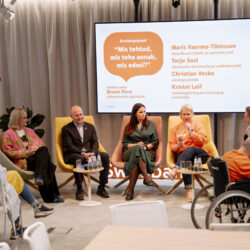
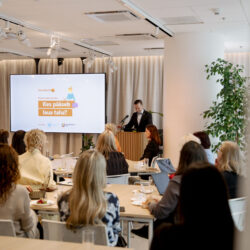
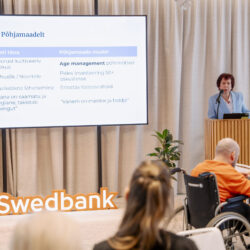
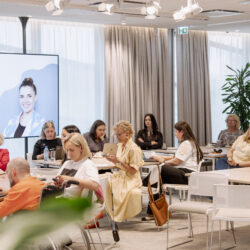
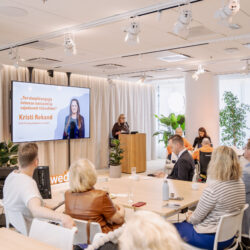
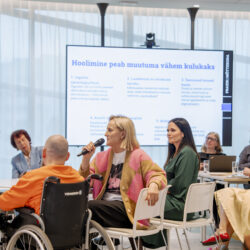
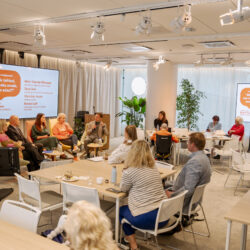
The speeches delivered at the conference “Kes pääseb laua taha?” (“Who Gets a Seat at the Table?”), organised by Swedbank and the Estonian Human Rights Centre, reflected a rare consensus among the business leaders, experts and officials who took to the stage: the Estonian employers who will thrive in the future are those who can build workplaces that are genuinely open to a diverse range of people.
“The message of today’s conference was clear: diversity is not merely a fine-sounding slogan, but a question of the long-term sustainability of the Estonian economy,” said Kelly Grossthal, Head of Diversity and Inclusion at the Estonian Human Rights Centre. “Estonia’s labour market is too small to afford excluding people on the grounds of their age, gender, background or health. Every person deserves a good working environment — in every corner of Estonia and in every sector, whether that is a manufacturing company in a small county town or a technology firm in Tallinn.”
The conference opened with a sobering set of statistics: more than ten percent of Estonia’s working-age population has a reduced capacity for work; tens of thousands of people are actively looking for a job without finding one; tens of thousands more have given up looking altogether; and over twenty thousand young people are neither in employment nor in education or training. Yet alongside the concern came an opportunity: if ways could be found to bring even a portion of these people into the labour market, the effect on the Estonian economy would be tangible. According to Swedbank senior economist Liis Elmik, GDP could increase by as much as 4%.
The recommendations from experts were firmly grounded in present-day realities. Estonia’s birth rate is negative, the number of people with health conditions and those of retirement age is rising, and working-age men are increasingly embracing a new concept — caring masculinity. From an employer’s perspective, this means it makes good sense to begin actively engaging groups that may previously have been too readily passed over: people with different backgrounds, different mother tongues, different ages and different needs.
Recruiting consciously from new population groups may feel unfamiliar at first and require extra steps from employers. At the same time, a thought shared at the conference by Maris Vaarma-Tõnisson, Hotel and Reception Manager at Wasa Resort, resonated strongly: when it comes to including people with special needs, the hardest part is the beginning — once there are good examples and successful practices to draw on, accommodating difference becomes easier. Employers who are already making a conscious effort to build diverse workplaces offered a compelling counterpoint: diversity means resilience. The organisations investing in inclusion today are more likely to be the ones still thriving tomorrow.
Since you are here...
It is important to protect everyone’s human rights, because it helps to keep stability and peace in the society. There are many challenges for protection of human rights in Estonia: intolerance has really come out of the closet. Bad things happen when good people are too passive, but together we can make a change.
Estonian Human Rights Centre is the competent, accountable and impactful independent human rights organisation in Estonia. Your recurring or one-time donation helps to stand up for human rights everywhere: in courts, in the media, in schools, in the workplace, on the streets and in governmental venues.
Donating is easy, and you can use your credit card if donating from abroad.
Donate now